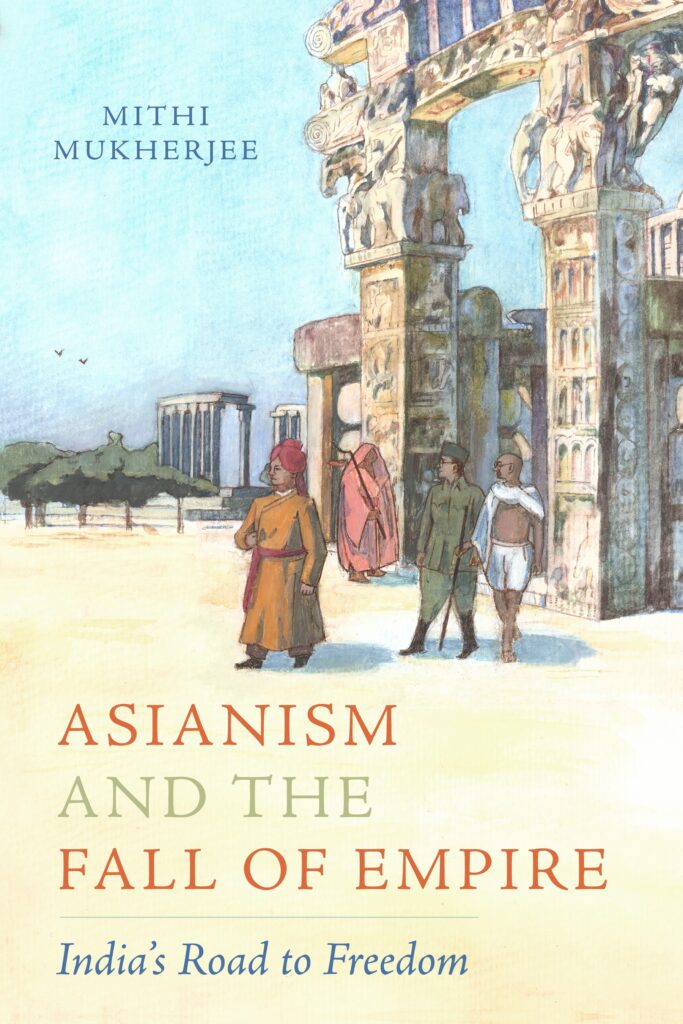
Offering a new global perspective on modern Indian history, Asianism and the Fall of Empireidentifies the rise of Asianism in the early twentieth century as the origin and primary driving force of resistance movements-both nonviolent and violent-that brought down the British Empire. Asia emerges in this breakthrough retelling not as an inert geographical category, but instead as a singular agent of change in modern world history.
Review
“Mithi Mukherjee makes a compelling case for Asianism to be recognized as a key element in India’s anticolonial struggle. Exploring the mutually reinforcing strands of cultural Asianism and geopolitical Asianism, she brilliantly shows how both nonviolent and revolutionary Indian resistance to British imperial rule forged broader solidarities under the sign of Asia.”—Sugata Bose, author of Asia after Europe: Imagining a Continent in the Long Twentieth Century
This book offers a new interpretation of modern Indian political, legal, intellectual, and constitutional history. It explains the complex and seemingly contradictory nature of the postcolonial Indian polity by locating it an alternative historical narrative of the British Empire in India and India’s struggle for independence. It pursues this narrative along two major trajectories. On the one hand, it focuses on the role of the category of “justice” and imperial judicial institutions and practices in the making of both the British Empire and the anti-colonial movement under the Congress, with the lawyer as political leader.
On the other hand, it offers a novel interpretation of Gandhi’s non-violent resistance movement. It shows that the Gandhian movement was anchored not in western discourses of political and legislative freedom but rather in indigeneous traditions of renunciative freedom, with the renouncer as leader.